 44 7897 074717
Review Article - Journal of Clinical Ophthalmology (2025) Volume 9, Issue 1
Ocular pain and cervicogenic headache.
Marco Antonio Takashi Utiumi1, Elcio Juliato Piovesan1,2*
1Department of Neurology, Headache Center, Sao Jose Neurology Clinic, Sao Jose dos Pinhais, PR, Brazil
2Department of Internal Medicine, Federal University of Parana, Curitiba, Brazil
*Corresponding Author:
- Marco Antonio Takashi Utiumi Department of Neurology, Headache Center, São José Neurology Clinic, São José dos Pinhais, PR, Brazil E-mail:piovesan1@hotmail.com
Received: 08-Oct-2024, Manuscript No. AACOVS-24-149763; Editor assigned: 11-Oct-2024, AACOVS-24-149763 (PQ); Reviewed: 25-Oct-2024, QC No. AACOVS-24-149763; Revised: 08-Feb-2025, Manuscript No. AACOVS-24-149763 (R); Published: 15-Feb-2025, DOI: 10.35841/aacovs.9.1.673-677
Citation: Utiumi MAT, Piovesan EJ. Ocular pain and cervicogenic headache. J Clin Ophthalmol. 2025;9(1):673-677
Abstract
Because headaches often include the orbital and periorbital areas, it is not uncommon for patients to go to the ophthalmologist complaining of pain in the eye. However, not all eye pain is caused by ocular or orbital disorders. Various head, face, and neck structures can cause this symptom. Cervicogenic headache is defined as head pain originating in the cervical spine, including its bony elements, discs, and soft tissues. It is essential to know how to recognize scenarios in which the primary disorder is of the cervical spine to reduce cases of undiagnosed eye pain, avoid unnecessary procedures, alleviate patient suffering, and prevent debilitating consequences of dangerous cervical disorders. This article reviews the diagnosis, epidemiology, clinical manifestations, and pathophysiology of cervicogenic ocular pain. We also discuss disorders of neck structures other than the cervical spine that potentially cause orbital or periorbital pain.
Keywords
Cervicogenic headache, Eye pain, Neck pain, Zygapophyseal joint, Myofascial pain syndrome.
Introduction
The ocular and cervical musculoskeletal systems have motor and sensory interactions that allow proper control of the cervico-ocular coordination [1] and sensory information among the face, skull, and cervical region [2]. Disturbances in ocular accommodation and consequent contractures of the ciliary muscles produce increased contracture of the trapezius muscle and neck pain [3,4]. A classic example is impaired visual convergence in non strabismic binocular dysfunctions [5]. In the opposite direction, the whiplash injury in the cervical chain produces an imbalance in cervico-ocular coordination [1,6,7]. This phenomenon is believed to occur due to a cervical imbalance between the sympathetic and parasympathetic systems, affecting visual accommodation and ocular convergence [7–9].
Ocular pain caused by cervical disorders may occur relatively frequently due to the presence of trigeminocervical convergence mechanisms at the level of the Trigeminal Nucleus Caudalis (TNC) [2]. It is a human physiological mechanism capable of inducing pain in an area with a different nerve supply than the site that originated the stimulus. Pivotal studies conducted by our group have shown that nociceptive stimulation of the greater occipital nerve (branch of the first cervical roots) can produce pain in the neck with unilateral spread to the frontal and orbicular regions.
Eye pain is an expected manifestation of cervicogenic headache. As an isolated symptom, however, it is a rare clinical finding. The pain is usually referred to as retro-orbital, with fixed laterality, and might be associated with cranial autonomic manifestations (e.g., rhinorrhea, nasal congestion, lacrimation, ptosis, lid edema, and flushing). The above combination of symptoms is also found in the trigeminal autonomic cephalalgias. This group is characterized by attacks of moderate to very intense pain, lasting between two and 180 minutes, recurring several times a day. An exception with chronic evolution without remission is hemicrania continua, which causes persistent pain with periods of moderate to severe exacerbations and is responsive to indomethacin.
Head trauma associated or not with whiplash injury of the cervical spine can also generate eye pain. In a study evaluating 18492 war veterans who had suffered craniocervical trauma compared to 167807 veterans with no history of external injury, eye pain could be found in 14.8% and 5.3% of the groups, respectively, suggesting a complex association between the head and neck injuries and ocular pain.
In this review, we describe cervicogenic headache (not associated with trauma), presenting its semiological aspects and diagnostic criteria, emphasizing the relationship between the cervical musculoskeletal system as a generator of ocular pain and its possible trigeminal convergence mechanisms. Several studies have demonstrated the association of the neck with visual, oculomotor, and balance functions, which is beyond the scope of this study. We recognize that some disorders can simultaneously affect the eye and the neck, such as intracranial hypertension, neuromyelitis optica, and ocular metastases originating from cervical structures. These conditions cannot be considered cervicogenic headaches and will not be discussed here.
Literature Review
Cervicogenic headache and its diagnostic criteria
The International Classification of Headache Disorders 3rd edition (ICHD-3) defines headache as pain located in the head in a region above the orbitomeatal line (thus including the orbital and supraorbital areas) and the nuchal ridge. Various structures in the neck can cause headaches. When the causative structure belongs to the cervical spine (bone, disc, and soft tissue components), we call the disorder Cervicogenic Headache (CEH). There are two sets of well-established diagnostic criteria for this disorder.
The ICHD-3 requires four criteria. Firstly, the presence of a headache. Second, evidence (clinical or radiological) of a cervical spine disorder. Thirdly, a causal relationship between the first two. Finally, the absence of another diagnosis that better explains the case. The third point can be satisfied in the presence of two of four factors: A temporal relationship between the onset of the headache and the onset of the disorder; improvement of the headache in parallel with improvement of the neck disorder; reduction in the neck range of motion and worsening with provocative maneuvers, noted on physical examination; and pain relief after blocking the cervical causal structure. It is not always easy to satisfy the first two causal factors.
The Cervicogenic Headache International Study Group (CHISG) proposed three major diagnostic criteria in 1998. First, clinical evidence of cervical involvement. Secondly, confirmatory evidence through anesthetic blocks. Finally, the headache must be unilateral without side-shifting. For the first criterion, three clinical characteristics, in order of importance, are accepted: Provocable pain like the reported headache; reduced range of motion of the neck; and pain in the neck, shoulder, or arm ipsilateral to the headache. The first characteristic is mandatory. Either complaints of pain precipitated by neck movements or head postures, or pain triggered by pressure on the occipito-cervical region by the examiner are accepted.
Epidemiology and clinical manifestations of the cervicogenic headache
The Vaga epidemiological study by Sjaastad and Bakketeig showed a prevalence of 4.1% for CEH. The female: male ratio was 1:1.41, and the average age of onset was 32.7 years. Many patients reported a history of traumatic injury of the head or neck. The pain was usually of moderate intensity, unilateral, pulsatile, exacerbated by mild physical activity (39%), and associated with autonomic symptoms, mainly photophobia (19%) and phonophobia (28%). Most (61%) reported a chronic course with exacerbations lasting >72 h, possibly associated with neck movement and head posture variations throughout the day. It is, therefore, possible to confuse CEH with the pain of chronic migraine. However, the onset of pain in the nuchal area with anterior irradiation, possibly including orbital areas, reported by 97% of patients with CEH might facilitate the differential diagnosis. Similarly, the small proportion (5%) who manifested lacrimation could be misdiagnosed as having hemicrania continua. Blocking the greater occipital nerve or cervical structures can relieve pain and confirm the diagnosis.
Trigeminocervical convergence and ocular pain
Sensory innervation of the orbital region occurs through the trigeminal nerve (CNV), while the cervical spine depends on the cervical sensory branches. A neck disorder might manifest with eye pain due to the relationship at the level of the TNC where nociceptive inputs from the eyes (CNV) and the cervical spine (cervical branches) converge in an excitatory or inhibitory manner.
Campbell and Parsons studied the pain patterns triggered by injecting hypertonic saline into various regions of the upper axial skeleton. Orbital pain developed after injection into the basal occipital region (occipital periosteum and/or the atlantooccipital joint, 70%) and midline ligamentous tissues between the occipital bone and C1 (38%) and between C1 and C2 (14%). No participant reported ocular pain after stimuli at lower levels, suggesting that only the uppermost portion of the axial skeleton can give rise to eye pain.
Similarly, Feinstein et al. mapped pain originating in the paravertebral muscles. Injection at the level between the occipital bone and C1 generated pain in the upper posterior cervical region, and some participants felt ipsilateral supraorbital pain.
It is interesting to notice that cervical discs can cause occipitocervical and arm pain but do not appear to be a source of orbital discomfort.
The C2-3 zygapophyseal joint seemed to be a frequent source of headache and orbital/periorbital pain and was studied in ten patients with occipital/suboccipital pain by Bogduk and Marsland. Seven participants responded to the anesthetic block of its nerve supply (third occipital nerve). Of these, control injections to manage the placebo effect were performed in five, reinforcing the role of the C2-3 zygapophyseal joint. Four of these cases had orbital/periorbital pain. A more extensive and recent mapping of the zygapophyseal pain indicated that orbital symptoms occurred at the levels C1-2 (45-69%) and C2-C3 (20-45%), and supraorbital pain at the levels C2-3 (70-94%) and C3-4 (20-45%).
In short, the more rostral the cervical inputs to the TNC, the more likely it is that painful symptoms will arise in the orbital and periorbital regions (Figure 1). The role that nociceptive stimuli from the C4 level or below play in the pathophysiology of CEH is still uncertain. Still, they seem unlikely to justify ocular pain without a defined etiology, warranting further investigation.
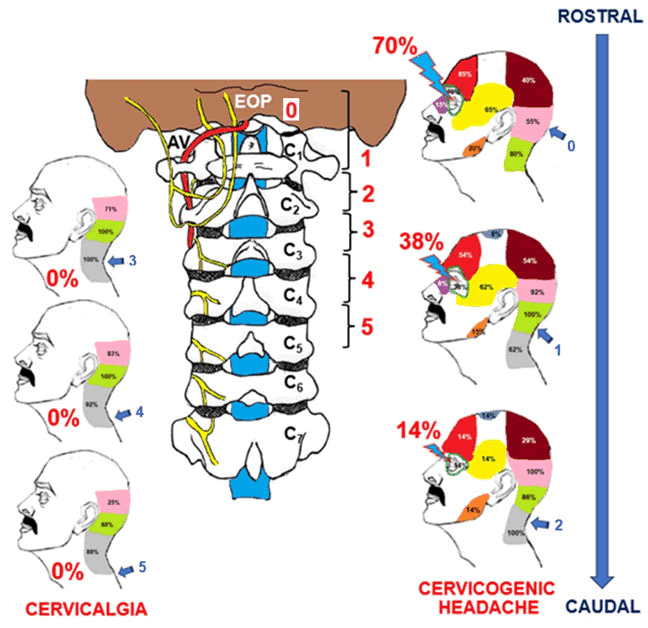
Figure 1. Ocular pain patterns after noxious stimulation over the occipital and cervical regions.
Note: Pain patterns were reported after injection of hypertonic saline at different cervical spine levels. Only injections in the first three spaces triggered ocular pain in 70%, 38%, and 14% of the participants, with a decreasing proportion in the rostrocaudal direction. These findings emphasize the upper cervical spine's role in the genesis of cervicogenic headache and of the lower cervical spine in cervicalgia. EOP: External Occipital Protuberance; AV: Vertebral Artery; site 0: basal occipital region; site 1: median ligamentous structures between the occipital bone and the first cervical vertebra; site 2: structures between the first and second cervical vertebrae; site 3: structures between the second and third cervical vertebrae; site 4: structures between the third and fourth cervical vertebrae, and site 5: structures between the fourth and fifth cervical vertebrae
Finally, it is worth remembering that the convergence mechanism can occur in the opposite direction. Our group showed that migraineurs exposed to light stimuli of sufficient intensity to produce discomfort showed reduced pain thresholds in the trigeminal and cervical territories. A report of three people from the same family exposed to ultraviolet irradiation showed the development of photokeratitis and epidermal phototoxicity, causing, among other symptoms, a burning sensation on the face and back of the neck.
Discussion
Management of cervicogenic headache
The treatment of CEH is best conducted in a multidisciplinary environment. The core of the management involves blockades and physiotherapy treatments, which we discuss elsewhere.
Ocular pain due to neck disorders: Beyond the cervical spine
CEH is, by definition, caused by disorders of the upper axial structures. However, other neck elements might manifest as headache and, more specifically, eye pain.
Carotid artery dissection
Electrical stimulation of the carotid artery can trigger orofacial and orbital pain. So, it is worth to consider neck vascular disorders.
Silbert et al. studied the headache characteristics of 161 symptomatic patients with spontaneous Internal Carotid Artery (ICAD, n=135) and Vertebral Artery Dissections (VAD, n=26). About 78% of ICAD patients reported head or neck pain. Headache was a frequent complaint (68%), mostly of gradual onset, preceding or concurrent with other manifestations, affecting the ipsilateral frontal/frontotemporal region and of a constant nature. Neck pain predominated in the anterolateral region. More specifically, ocular pain was found in 42% of cases and was an isolated manifestation (without headache or facial pain) in only 4%. In the VAD group, although complaints of head or neck pain were frequent (88%), no cases of facial or orbital pain were reported.
Other findings could reinforce the diagnostic suspicion of ICAD. Horner’s syndrome with miosis, ptosis, and anhidrosis might be present. The latter is usually restricted to the supraorbital area since the sweat glands of the face are innervated by postganglionic sympathetic fibers that travel along the external carotid artery. In addition, lower cranial nerve (IX-XII) palsy, pulsatile tinnitus and carotid murmurs, and ischemic events in the carotid territory (including the retina and optic nerve) in various combinations may suggest the presence of ICAD. The latter warrants the classification of cervical arterial dissections as potential medical emergencies requiring prompt referral.
Carotidinia
Carotidinia, also known as Fay's syndrome, is a disorder described by Fay in 1927 and is characterized by pain associated with tenderness over the carotid bifurcation.
In their recent seminal study, Lecler et al. analyzed the images (MRI, CT, or US) of 47 patients with unclassified carotid abnormalities. The authors identified images suggestive of an eccentric perivascular infiltration in all patients. This finding reinforced that carotidinia is a specific disorder with peculiar clinical and radiological characteristics. For this reason, the authors suggested an acronym for this new nosological entity: TransIent Perivascular Inflammation of the Carotid artery (TIPIC).
Carotidinia is self-limiting, resolving within 7-14 days, so treatment is typically supportive (rest and NSAIDs), and a short course of corticosteroids may be prescribed.
It is worth noticing that the involvement restricted to the adventitia of the carotid artery differentiates TIPIC from vasculitis, a group of diseases that causes inflammation of the entire thickness of the vessel throughout the body. Vasculitis can, therefore, affect the various head and neck vessels and manifest with orbital pain, such as Cogan’s syndrome.
Myofascial pain
Simons et al. defined myofascial pain syndrome as sensory, motor, and autonomic manifestations arising from myofascial Trigger Points (TP). They described the latter as hypersensitive points in the skeletal muscle associated with palpable nodules and taut bands.
The exact pathophysiology of TP is uncertain. The integrated hypothesis implies an excess of acetylcholine with consequent abnormal depolarization in the motor endplate and persistent contractures. Local hypoxia and hypoperfusion possibly cause an energy crisis that intensifies the release of acetylcholine, lowers pH, activates nociceptors, and initiates sensitization processes.
Pain from TP could be felt in distant areas, which is why it is called referred pain. Among the muscles that can cause pain in the eye and eyebrow area, many belong to the neck, including the sternal portion of the sternocleidomastoid, splenius cervicis, suboccipitalis group, occipitalis, and upper trapezius. In addition, the longus colli, located deep in the neck just in front of the body of the C1 to T3 vertebrae, can cause pain lateral to the eye. The mechanism of referred pain is not fully understood but probably involves central sensitization mechanisms.
The eye and neck are interconnected not only functionally but also anatomically. The myofascia, composed of the connective tissue associated with skeletal muscles, forms a true continuum linking the fascial sheath of the eyeball (Tenon's capsule) with the superficial and deep cervical fasciae. This relationship may have implications for visual and oculomotor functions as well as the origin of ocular and cervical pain.
The assessment and treatment of TP associated with each of the muscles mentioned above is beyond the scope of this review. However, it is an etiology worth looking for in patients without significant visual complaints with diffuse, dull pain over the eye, head, and neck. Mellick and Mellick reported a 1- year retrospective review of their experience with cervical intramuscular bupivacaine injection in cases of orofacial pain seen in the emergency department. Their sample included six patients with ocular pain and three with glaucoma, of whom four and one evolved with complete relief, respectively.
Occipital neuralgia
Neuralgia is characterized by paroxysms of pain, described as intense, brief (up to a few minutes), and shooting, stabbing, or sharp in quality. It could be felt in the territory of the occipital nerves (greater, lesser, and third), where tenderness, dysesthesia, or allodynia might be found, characterizing occipital neuralgia. Our group has shown, however, that nociceptive stimulation of the greater occipital nerve could trigger pain beyond its innervation territories and reach the orbital and supraorbital areas.
The neuralgic nature and the tenderness over the emergence of the occipital nerves (explored by palpating the region between the occipital protuberance and the tip of the mastoid process) raise suspicion. The response to anesthetic blockades can define the diagnosis. Ellis and Kosmorsky evaluated the response to the block in patients with ocular pain who also reported hemicrania and suboccipital tenderness. About 83% reported some relief, and 75% experienced improvement that lasted beyond one week.
O'Neill et al. published a case of superior laryngeal neuralgia, a neuralgic condition related to carotidinia. The patient reported pain in the anterior region of the neck that radiated to other regions, including the retroorbital area. Vocal anomalies, tenderness in the neck, and deviation of the glottis, as documented by laryngoscopy, guided to the correct diagnosis.
Eagle's syndrome
In 1937, Eagle described two cases of pain in the pharynx, head, and neck attributed to an elongated styloid process. The causal association between the anatomical anomaly and the pain is established by findings such as worsening with palpation over the stylohyoid ligament and rotation of the head, as well as relief with local anesthetic injection. Symptoms may arise from compression of adjacent structures such as the facial, auriculotemporal, lingual, glossopharyngeal, and hypoglossal nerves, as well as the carotid arteries. Vascular involvement may be associated with ICAD and/or its symptoms (e.g., cerebrovascular events and Horner's syndrome). Radiological assessment, including plain radiography or computed tomography, can show the elongated styloid process, although there is no consensus regarding the minimum length, ranging from 2.5 to 4.0 cm.
In 2013, Peñarrocha-Oltra et al. published their series of six cases of Ernest's syndrome, a condition related to Eagle's syndrome because it is attributed to stretching of the stylomandibular ligament. The patients reported pain in the preauricular region and the mandible's angle. Palpating and blocking the latter region worsens and relieves the symptoms, respectively. One of the patients complained of eye pain.
Conclusion
Not all eye pain is caused by ocular or orbital disorders. It can arise from disorders of the upper cervical spine, especially the C1-2, C2-3, and C3-4 zygoapophyseal joints. Other structures in the neck, including muscles, nerves, and arteries, can also present with eye pain. Vascular disorders imply a significant risk for the patient and require prompt and appropriate referral.
References
- Bexander CSM, Hodges PW. Cervico-ocular coordination during neck rotation is distorted in people with whiplash-associated disorders. Exp Brain Res. 2012;217(1):67–77.
[Crossref] [Google Scholar] [PubMed]
- Piovesan EJ, Kowacs PA, Oshinsky ML. Convergence of cervical and trigeminal sensory afferents. Curr Pain Headache Rep. 2003;7(5):377–83.
[Crossref] [Google Scholar] [PubMed]
- Domkin D, Forsman M, Richter HO. Ciliary muscle contraction force and trapezius muscle activity during manual tracking of a moving visual target. J Electromyogr Kinesiol. 2016;28:193–8.
[Crossref] [Google Scholar] [PubMed]
- Sánchez-González MC, Pérez-Cabezas V, López-Izquierdo I, et al. Is it possible to relate accommodative visual dysfunctions to neck pain? Ann N Y Acad Sci. 2018;1421(1):62–72.
[Crossref] [Google Scholar] [PubMed]
- Giffard P, Daly L, Treleaven J. Influence of neck torsion on near point convergence in subjects with idiopathic neck pain. Musculoskelet Sci Pract. 2017;32:51–6.
[Crossref] [Google Scholar] [PubMed]
- Roy RR. The role of binocular stress in the post-whiplash syndrome. Am J Optom Arch Am Acad Optom. 1961;38:625–36.
[Crossref] [Google Scholar] [PubMed]
- Roca PD. Ocular manifestations of whiplash injuries. Ann Ophthalmol. 1972;4(1):63–73.
[Google Scholar] [PubMed]
- Burke JP, Orton HP, West J, et al. Whiplash and its effect on the visual system. Graefes Arch Clin Exp Ophthalmol. 1992;230(4):335–9.
[Crossref] [Google Scholar] [PubMed]
- Brown S. Effect of whiplash injury on accommodation: Clinical Research. Clin Exp Ophthalmol. 2003;31(5):424–9.
[Crossref] [Google Scholar] [PubMed]