


 8 / 12

Page 28
Notes:
Ann Clin Trials Vaccines Res. 2017 | Volume 1 Issue 2
allied
academies
Global Vaccines & Vaccination Summit & B2B
November 01-02, 2017 | Toronto, Canada
V
accination against infectious agents has proven to be the
best way to prevent infectious diseases. We have created
genetically modified recombinant M gene mutants of the
Indiana serotype of vesicular stomatitis virus (VSVInd) and of
the New Jersey serotype of VSV (VSVNJ) as universal vectors
for the development of recombinant virus vaccines. The
priming vaccine vector should be antigenically distinct from the
boost vaccine vector in order to maximize the boost effects.
rVSVInd with the mutations of G21E/M51R/L111A in the M
protein (VSVIndGML) and rVSVNJ with the mutations of G22E/
M48R+M51R in the M protein (rVSVNJGMM) was attenuated
to a degree that mice injected with one million of these
genetically modified infectious viruses directly into the brain
showed no neurological signs or any other adverse effects.
In contrast, 1,000 infectious wild-type VSV kills mouse within
4 days. Foreign genes inserted into these VSV vectors elicit
strong B cell and T cell immune responses against the inserted
gene products when we prime animals with rVSVInd(GML)
followed by boost immunization with rVSVNJ(GMM) carrying
the same genes of interest. Animals can tolerate over 109
PFU of recombinant infectious VSVInd(GML) and recombinant
infectious rVSVNJ(GMM) and showed high levels of gene
expression and adaptive immune responses. Our results show
clearly that rVSVInd (GML) priming and rVSVNJ (GMM) boosting
is the best way to induce ultimate humoral and cellular immune
responses. I will describe the advantages of these dual serotype
VSV vectors for future vaccine development against infectious
diseases. This is a platform technology applicable for many
types of vaccine development.
Speaker Biography
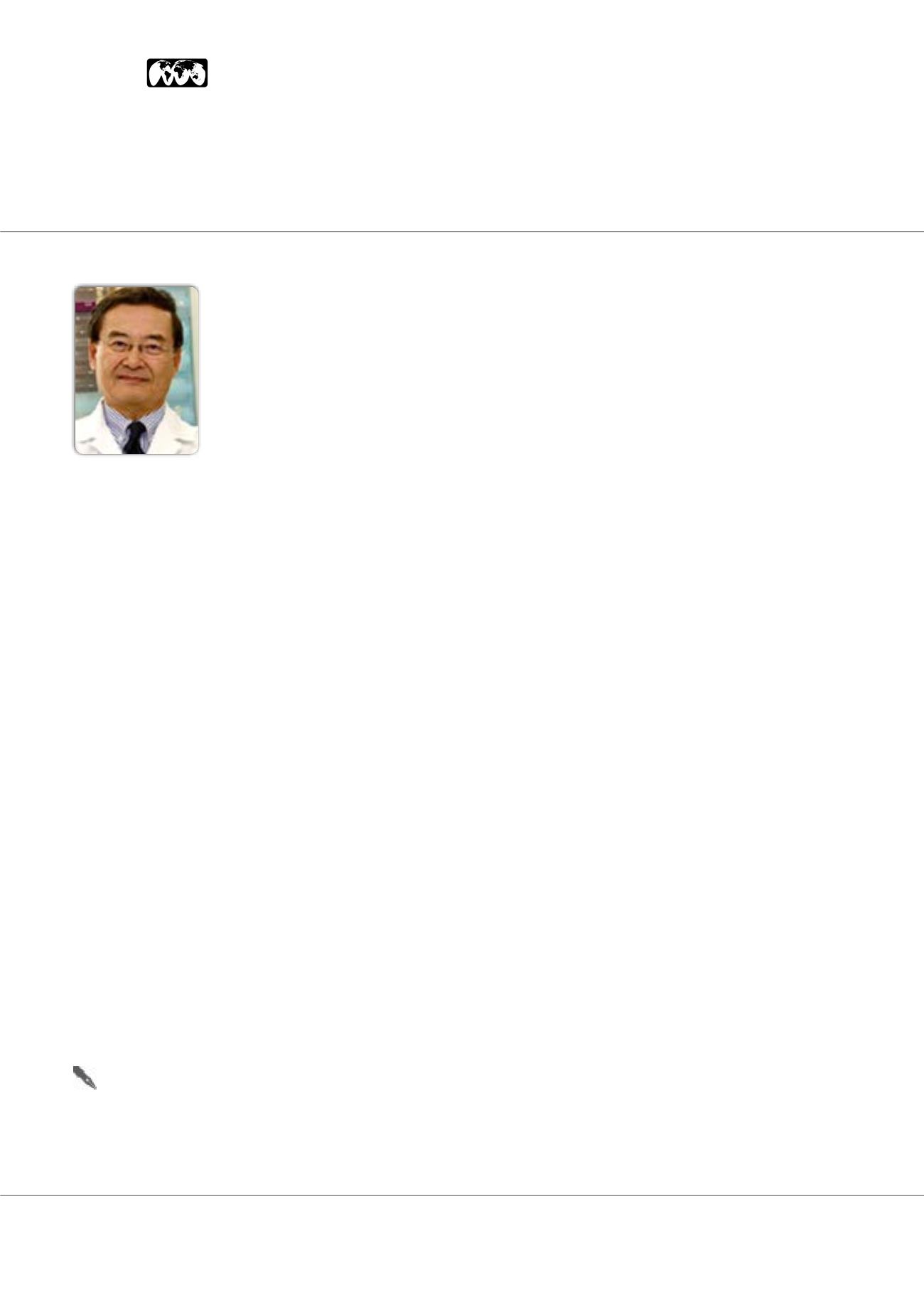
C Yong Kang has received his PhD from McMaster University in Canada in 1971 and
his DSc degrees from McMaster University and from Carleton University. He took his
three-year Postdoctoral training at the University of Wisconsin, Madison, USA. He
has served as a Professor of Microbiology at the University of Texas, Southwestern
Medical School in Dallas, Professor and Chairman of the Department of Microbiology
and Immunology at University of Ottawa, Faculty of Medicine, Dean of Science at
the University of Western Ontario, and currently is serving as Professor of Virology
in the Department of Microbiology and Immunology, Schulich School of Medicine
and Dentistry at the University of Western Ontario. His research in molecular virology
includes the development of antiviral therapeutic agents and efficacious vaccines
against various human viral diseases. He has published 297 scientific papers in fields
of virology, medicine, and molecular biology. He holds nine international patents. He
has received numerous prizes including Ho-Am Prize in Medicine in 1999 and Queen
Elizabeth II Diamond Jubilee Medal of the Governor General of Canada in 2012. He is
an elected Life-time Fellow of the Royal Society of Canada, Academy of Science and an
elected Life-time Member of the Korean Academy of Science and Technology.
e:
cykang@uwo.caChil-Yong Kang
The University of Western Ontario, Canada
Universal viral vectors for prophylactic vaccines against infectious diseases and for
therapeutic vaccines against persistent viral infections